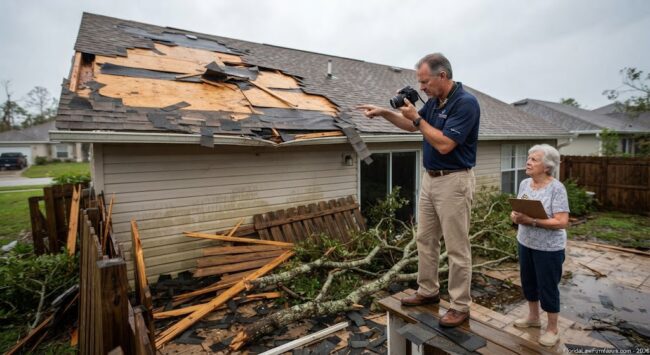
Denied, Delayed, or Underpaid: Your Hurricane and Property Insurance Claim Deadlines in Florida — and What’s Left of Your Right to Sue
Last updated: August 24, 2026 | FloridaLawFirmNews.com Staff | Property Insurance Desk — 2026 Hurricane Season Edition
Short answer: In Florida, you generally must give your insurer written notice of a hurricane or windstorm property claim within 1 year of the date of loss, file any supplemental or reopened claim within 18 months, and file a lawsuit for breach of the policy within 5 years of the date of loss — after first serving a mandatory pre-suit notice on the insurer. Yes, you can still sue your insurance company in Florida, but the 2022–2023 reforms eliminated one-way attorney fees and assignments of benefits, so the economics of doing so have fundamentally changed.
Every hurricane season resets the clock for thousands of Florida households. This page is the standing reference for the deadlines, the insurer’s obligations, the post-reform litigation rules, and the Citizens Property Insurance wrinkles that determine whether a storm-damaged homeowner gets paid. It is updated after every named-storm landfall and every legislative change.
The Deadline Table Every Florida Policyholder Should Screenshot
Deadlines below reflect the current statutory framework for residential property claims (Fla. Stat. §§ 627.70132, 627.70152, 95.11) following the December 2022 special-session reforms (SB 2-A) and the 2023 tort reform (HB 837). Older losses may carry longer windows — see the note beneath the table. Verify against current statutes before relying on any entry.
| Step | Deadline | Statute | What it means |
|---|---|---|---|
| Initial notice of claim | 1 year from date of loss | § 627.70132 | Written notice to the insurer that you have a claim. Miss it and the claim is barred, no matter how strong. |
| Supplemental / reopened claim | 18 months from date of loss | § 627.70132 | Additional damage discovered later (hidden roof, mold progression) must be noticed within this window. |
| Mandatory pre-suit notice | At least 10 business days before filing suit | § 627.70152 | You must serve the Department of Financial Services notice form with an estimate and demand before suing; the insurer gets a chance to respond, pay, or demand appraisal. |
| Lawsuit for breach of policy | 5 years from the date of loss | § 95.11 | The 2023 amendments tie the five-year contract limitations period to the date of loss itself, not the date of the insurer’s breach. |
Date-of-loss matters more than ever. Because the legislature shortened these windows in stages (3 years historically → 2 years under SB 76 in 2021 → 1 year under SB 2-A for claims after December 16, 2022), the deadline that governs your claim depends on when the storm hit, not when you call. When a boundary case is close, treat the shortest possible deadline as real and get advice immediately.
What Your Insurer Owes You: The Clock Runs Both Ways
The reforms didn’t only shorten policyholder deadlines — they compressed insurer response times under Fla. Stat. § 627.70131. Under the current framework, a residential property insurer must generally:
- Acknowledge your claim within 7 days of receiving it;
- Begin its investigation and conduct any physical inspection within 30 days of receiving proof of loss;
- Pay or deny the claim, in whole or in part, within 60 days of receiving notice (down from the old 90-day standard), absent factors beyond its control;
- Provide, on request, the adjuster’s report and identify each adjuster who handled the claim.
Interest accrues on late payments, and patterns of violations are reportable to the Office of Insurance Regulation (OIR) and the Department of Financial Services (DFS), which runs the state’s free mediation program for disputed residential claims. Document every date: the insurer’s own missed deadlines are often the strongest leverage a policyholder has left.
Can You Still Sue Your Insurance Company in Florida? Yes — Here’s What Changed
The right to sue survived the reform era. Three things around it did not.
1. One-way attorney fees are gone
For decades, former § 627.428 meant a policyholder who beat their insurer in court recovered attorney’s fees from the carrier — the equalizer that made a $15,000 roof dispute economically possible to litigate. SB 2-A repealed one-way fees for property insurance suits, and HB 837 finished the job across insurance litigation while restricting fee multipliers. Today, each side generally bears its own fees, which pushes small disputes toward appraisal, mediation, and negotiated outcomes instead of the courthouse.
2. Assignment of benefits (AOB) is dead for new policies
For residential property policies issued on or after January 1, 2023, policyholders may no longer assign post-loss insurance benefits to contractors or restoration companies. The AOB era — in which a roofer or water-mitigation firm took the claim and the lawsuit — is over. Homeowners now stand in their own shoes on every claim, which makes understanding these deadlines a homeowner’s job, not a vendor’s.
3. Pre-suit notice and insurer off-ramps
Before filing suit, § 627.70152 requires a detailed pre-suit notice through DFS. The insurer can respond by paying, inviting mediation, or demanding appraisal, and courts routinely enforce appraisal clauses — meaning many disputes are now resolved by dueling appraisers and an umpire rather than a jury. Bad faith exposure was also narrowed (§ 624.155, as amended by HB 837): negligence alone is not bad faith, and an insurer that tenders limits within 90 days of actual notice of a claim gains a safe harbor.
The bottom line: litigation is still available for wrongful denials and gross underpayments, but the modern playbook runs notice → documentation → mediation/appraisal → pre-suit demand → suit, in that order.
The Citizens Property Insurance Wrinkles
More than a million Floridians have cycled through Citizens Property Insurance Corporation, the state-created insurer of last resort, and Citizens policyholders face rules private-market customers don’t:
- Takeout / depopulation offers. Citizens continuously invites private carriers to assume its policies. Under the eligibility rules, if a takeout offer arrives within 20% of your Citizens premium, declining it can cost you Citizens eligibility. Offers arrive by mail with short response windows — read them; silence is a choice.
- Flood coverage requirement. Citizens policyholders with wind coverage are being phased into a mandatory flood insurance requirement, regardless of flood zone, on a schedule tied to dwelling value. Hurricane water damage disputes frequently turn on the wind-versus-flood line, and lacking flood coverage converts that dispute into an uncovered loss.
- Litigation posture. Suits against Citizens involve additional statutory presuit hoops and venue considerations, and Citizens aggressively invokes appraisal. The deadlines in the table above still govern.
(Verify current takeout thresholds and the flood-requirement phase-in schedule at citizensfla.com — both have been adjusted repeatedly and remain moving targets.)
After the Storm: The 10-Step Claim Protocol
- Photograph and video everything before touching anything — wide shots, close-ups, serial numbers, standing water lines.
- Make only reasonable emergency repairs (tarping, water extraction) and keep every receipt; policies require you to mitigate but not to renovate.
- Give written notice to your insurer immediately — email or portal submission that generates a timestamp. The 1-year clock is already running.
- Locate your full policy, including endorsements; request a certified copy if you can’t find it.
- Log every insurer contact: date, name, adjuster license number, what was said.
- Attend the inspection and walk the adjuster to every damaged area; adjusters don’t climb into what they aren’t shown.
- Get your own repair estimates from licensed contractors — itemized, per-trade, with photos.
- Calendar three dates the day you file: 1-year notice deadline, 18-month supplemental deadline, 5-year suit deadline.
- If underpaid or denied, request the adjuster’s report, invoke DFS mediation, and consider a licensed public adjuster or counsel before the supplemental window closes.
- Before suing, ensure the § 627.70152 pre-suit notice is served correctly — a defective notice can sink an otherwise timely case.
Frequently Asked Questions
How long do I have to file a hurricane claim in Florida? One year from the date of loss to give your insurer notice of the claim, and eighteen months for any supplemental claim. Fla. Stat. § 627.70132. Older storm dates may fall under the prior two- or three-year windows.
How long does my insurance company have to pay a hurricane claim in Florida? Generally 60 days from notice of the claim to pay or deny, with a 7-day acknowledgment requirement and a 30-day investigation/inspection window along the way. Fla. Stat. § 627.70131.
Can I still sue my homeowners insurance company in Florida? Yes — within five years of the date of loss, after serving the mandatory pre-suit notice. But one-way attorney fees are repealed, so fee economics must be evaluated case by case.
Is assignment of benefits still legal in Florida? Not for residential property policies issued on or after January 1, 2023. Contractors can no longer take an assignment of your insurance claim.
Does my hurricane deductible apply per storm? Florida’s hurricane deductible (typically 2%–10% of dwelling coverage) applies on a calendar-year basis — multiple hurricanes in one season don’t each trigger a fresh full hurricane deductible.
Who pays for wind versus flood damage? Wind-driven damage falls to your property policy; rising water falls to flood insurance (NFIP or private). Storm-surge losses without flood coverage are the most common — and most devastating — coverage gap in Florida.
What is DFS mediation and is it free? The Department of Financial Services runs a mediation program for disputed residential property claims; the insurer bears the cost for eligible claims. It is often the fastest lever for a stalled claim.
What if I miss the one-year notice deadline? The claim is presumptively barred. Narrow arguments exist in unusual circumstances, but no one should plan around them — notice early, even if the full scope of damage isn’t yet known, and supplement later within 18 months.
Brian’s Take
“The legislature took away the fee statute, the AOB, and half the calendar — but it also took away the insurer’s excuses, and almost nobody uses that half of the law. Screenshot the deadline table, notice every claim the week of the storm, and make the carrier live by its own 7-30-60 clock. The homeowners who lose in Florida mostly lose in the first twelve months, not in the courtroom.”
FloridaLawFirmNews.com covers Florida legal developments for news and educational purposes. Nothing here is legal advice, and deadlines stated reflect the current statutory framework as summarized above — the legislature has amended these statutes repeatedly, and the window governing a specific claim depends on the date of loss and policy issuance. Verify all provisions against Fla. Stat. §§ 627.70131, 627.70132, 627.70152, 624.155, and 95.11 at leg.state.fl.us, and consult a licensed Florida attorney or public adjuster about any specific claim. Additional resources: DFS consumer services and mediation (myfloridacfo.com), Florida Office of Insurance Regulation (floir.com), Citizens Property Insurance (citizensfla.com), National Flood Insurance Program (floodsmart.gov).
About the Author