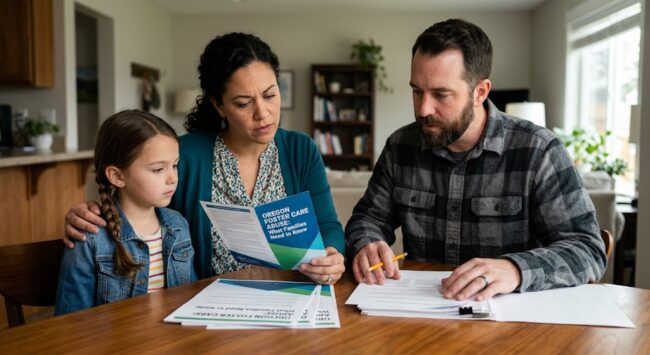
Quick Answer: Behavior changes, unexplained injuries, sudden fear of a caregiver, missed school, and frequent runaways can all signal abuse in an Oregon foster placement. Report concerns to the Oregon Child Abuse Hotline at 1-855-503-SAFE (7233), keep careful notes, and talk to counsel about the child’s legal rights. Justin Grosz, an Oregon-licensed attorney in Portland, reviews these cases.
Why the Adults Around a Foster Child Matter
A child in foster care rarely has one steady adult who sees them every day for years. They have a caseworker who may change several times, a foster parent who may be new, a teacher, a therapist, perhaps a Court Appointed Special Advocate (CASA), a lawyer, and birth relatives who see them on visits. Each of those people sees only part of the picture.
That fragmentation is one reason abuse in foster care can go unnoticed. Children who have already been removed from home often expect not to be believed. Some fear that speaking up will lead to another move, losing siblings, or being sent somewhere worse. Others have no words for what is happening, especially younger children and those with disabilities.
So the work of noticing falls to the adults around them. This article is for those adults: relatives, foster parents in nearby homes, teachers, coaches, counselors, CASA volunteers, and former foster youth who are worried about someone still in care. It covers the warning signs, what to do with what you see, and how the law can respond when Oregon’s system fails a child. When the signs point to serious harm, many families also consult a foster child abuse attorney in Oregon who focuses on child welfare cases.
Why Oregon Foster Children Face Heightened Risk
Oregon’s child welfare system has spent years under outside scrutiny. The federal class action Wyatt B. v. Brown, settled in 2022, described children moved repeatedly, placed far from home, sent to out-of-state facilities, and housed in hotels and agency offices when no placement was available. Audits and news reporting have tracked caseworker turnover and a shortage of foster homes, particularly for teenagers and children with complex needs.
Those conditions shape risk in concrete ways:
| System Condition | How It Raises Risk |
|---|---|
| Too few foster homes | Children placed with poorly matched or undertrained caregivers |
| Caseworker turnover | Fewer consistent eyes on the child |
| High caseloads | Missed or rushed home visits |
| Hotel and office stays | Little supervision, exposure to exploitation |
| Restrictive facilities | Restraint, seclusion, peer violence |
None of this means most foster placements are unsafe. Most are not. It means the safety net has gaps, and the adults around a child need to watch for warning signs.
Physical Abuse: What to Look For
Physical abuse in a placement can come from a foster parent, another adult in the home, an older child, or facility staff. Signs include:
- Bruises, burns, welts, or marks in patterns, such as the shape of a hand, belt, or cord
- Injuries on the back, buttocks, upper arms, face, ears, or neck, where accidents are less common
- Injuries at different stages of healing
- Explanations that don’t fit the injury, or change over time
- Long sleeves or extra layers in warm weather
- Flinching at sudden movements or raised voices
- Reluctance to go back to the placement after school or visits
A single bruise on a child’s shin usually means nothing. A pattern, an explanation that doesn’t make sense, or a child who seems afraid of a particular adult deserves attention.
Sexual Abuse: Harder to See, More Important to Catch
Sexual abuse often leaves no visible injury, and children are frequently threatened or groomed into silence. In foster care, the person causing harm may be a caregiver, a relative or friend of the caregiver, an older youth in the same home, facility staff, or someone outside the placement who targets a child with little supervision.
Possible warning signs include:
- Sexual knowledge, language, or behavior unusual for the child’s age
- Sexualized play or behavior toward younger children
- New fear of bathing, bedtime, or a particular room or person
- Bedwetting or regression in a child who had outgrown it
- Sudden gifts, money, phones, or secrets involving an adult
- Pain, bleeding, or infections
- Running away, especially repeatedly
- An older boyfriend, girlfriend, or “friend” who appears suddenly
Teenagers who run from placements or spend nights in hotels are especially vulnerable to trafficking. A youth who comes back with new clothing, unexplained money, or a new phone, or who seems controlled by someone else, may be in danger.
Because these cases involve delicate evidence and a child’s privacy, families often work with a child sexual abuse lawyer in Portland who uses a trauma-informed approach and limits repeat interviews of the child.
Neglect: The Most Common Harm
Neglect is the most frequently reported form of child maltreatment nationally, and it happens in foster placements too. Look for:
- Ongoing hunger, hoarding food, or noticeable weight loss
- Poor hygiene, unwashed or ill-fitting clothing
- Missed medical, dental, or therapy appointments
- Prescriptions not refilled or not given as directed
- Chronic absences or tardiness at school
- A young child left alone or in the care of other children
- Unsafe home conditions, such as no heat, exposed hazards, or unsecured weapons or drugs
Neglect tends to show up over weeks and months. Writing down what you observe, with dates, makes a pattern much easier to prove later.
Signs of Trouble in Group Homes and Treatment Facilities
Children with higher needs are often placed in group homes, residential treatment centers, psychiatric units, or shelters. These settings carry their own warning signs:
- Reports of being held down, restrained, or put in a “quiet room” for long periods
- Injuries the facility calls self-inflicted or caused by “peer conflict”
- Sudden increases in psychiatric medication or a child who seems sedated
- Restricted phone calls or visits without a clear reason
- Falling behind in school or not attending at all
- Staff who discourage the child from talking to outside adults
Federal and Oregon law limit how restraint and seclusion can be used on children. When a facility uses them as punishment or convenience, or when a child is hurt by another resident the facility knew was dangerous, an Oregon group home abuse lawyer can assess whether the facility and ODHS met their legal duties.
Children With Disabilities: Signs Can Look Different
Children with autism, intellectual disabilities, or communication challenges may not be able to say what happened. For them, warning signs often appear as behavior:
- New aggression, self-injury, or withdrawal
- Loss of skills they had mastered, such as toileting, speech, or routines
- Extreme distress around a particular person or place
- Therapies, equipment, or IEP services that stop without explanation
When a child with a disability is placed somewhere that cannot meet their needs, or is restrained and secluded instead of supported, the harm can be serious and lasting.
What to Do When You See Warning Signs
Noticing is the first step. What you do next can protect the child and preserve the evidence needed for accountability.
1. Make Sure the Child Is Safe Now
If a child faces immediate danger, call 911. Don’t wait to collect proof.
2. Report to the Oregon Child Abuse Hotline
Call 1-855-503-SAFE (7233), available 24 hours a day. You don’t need proof, only reasonable cause to suspect abuse. Reports involving children in certified foster homes and licensed facilities are typically investigated by ODHS’s Office of Training, Investigations and Safety.
Many Oregon professionals are mandatory reporters under ORS 419B.005 to 419B.050, including teachers, counselors, health care providers, clergy, and CASA volunteers. In Oregon, that duty generally applies at all times, not just during work hours.
3. Write It Down
Keep a simple, dated log. Write what you saw and heard, using the child’s exact words when possible. Note who else was present. Avoid adding opinions. Record when and how you reported, and to whom.
4. Don’t Interrogate the Child
If a child discloses abuse, stay calm, listen, thank them for telling you, and say you will get help. Don’t press for details or ask leading questions. Trained interviewers, often at a child abuse assessment center, are best placed to gather the child’s account.
5. Tell the Child’s Team
Share concerns with the caseworker, the child’s attorney, and the CASA if there is one. Put them in writing. A written record helps show later what ODHS knew and when.
6. Use Oversight Channels if Reports Stall
If you believe a report was mishandled, you can raise concerns with ODHS supervisors and the state’s foster care ombudsman, part of the Governor’s Advocacy Office. Oregon’s Foster Children’s Bill of Rights, codified in state law, sets out protections every child in care is owed.
7. Get Legal Advice
When a child has been hurt and the system did not respond, speaking with an Oregon ODHS negligence lawyer can clarify the child’s rights, applicable deadlines, and options.
When Reporting Isn’t Enough: Legal Accountability
Reporting protects the child in front of you. It doesn’t always repair the harm already done or change the conditions that allowed it. Civil claims can do both: provide resources for a child’s treatment and recovery, and push agencies and providers to act differently.
Depending on the facts, claims may involve:
| Who | Possible Claim |
|---|---|
| ODHS | Negligent placement, failure to protect, ignored reports |
| Foster parents | Direct abuse or negligent supervision |
| Private agencies | Negligent certification, training, or monitoring |
| Facilities | Staff abuse, improper restraint, understaffing |
| Public officials | Civil rights violations under 42 U.S.C. § 1983 |
Claims against ODHS and other public bodies go through the Oregon Tort Claims Act, which includes formal notice requirements. Oregon’s child abuse statute of limitations, ORS 12.117, generally allows claims until age 40 or within five years of discovery, but tort claim notice periods can be much shorter. Getting advice early protects the claim.
The dated notes, written reports, and emails to caseworkers described above often become key evidence. They can show that ODHS was warned and did not act, which is frequently the center of a failure-to-protect claim. An Oregon foster parent abuse attorney can obtain the rest, including case files, hotline records, and facility incident reports, through the legal process.
A Note for Foster Parents and Relative Caregivers
Foster parents and kinship caregivers are often the first to notice that something went wrong in a prior placement. A new child may arrive with injuries, sexualized behavior, or trauma that was never disclosed. Caregivers sometimes worry that raising concerns will lead ODHS to remove the child or close their home.
Those fears are understandable. Documenting what you observe, reporting through proper channels, and getting confidential legal advice can protect both the child and your family. Information about a child’s history matters for treatment, and in adoption cases, failure to disclose that history can itself be the basis for a claim.
Help Across Oregon
Foster care harm is not limited to the Portland area. Children are placed in homes and facilities throughout the state, including:
- Portland, Gresham, Beaverton, and Hillsboro
- Salem
- Eugene, Springfield, and Corvallis
- Bend
- Medford
Families outside Portland can work with a Eugene foster care abuse attorney or with attorneys who travel statewide to meet clients and review records.
Oregon-Licensed Counsel: Justin Grosz
Justin Grosz – Oregon-Licensed Attorney. Justin Grosz, a licensed Oregon attorney, represents children harmed in foster homes, group homes, residential treatment programs, and other state systems. A partner and co-leader of the firm’s child welfare division, he has tried more than 230 jury trials to verdict. His Oregon cases focus on what agencies and providers knew about the risks to a child, and what they did or failed to do about them.
Frequently Asked Questions
Do I need proof before calling the hotline?
No. Oregon law asks for reasonable cause to believe abuse occurred. Investigators determine what happened.
Can I report anonymously?
Members of the public can generally report without giving their name. Mandatory reporters are expected to identify themselves, and Oregon law protects good-faith reporters from liability.
What if the abuse happened years ago?
It may still be possible to bring a claim. Oregon allows child abuse claims until age 40 or within five years of discovery, though claims against public bodies have added requirements.
Can a relative or teacher contact a lawyer about a foster child?
Yes. Relatives, foster parents, CASAs, guardians ad litem, teachers, and other concerned adults can raise concerns. The lawyer will explain who has legal authority to bring a claim for the child.
Will contacting a lawyer get the child moved?
Not by itself. A legal consultation is confidential, and the child’s placement remains a matter for ODHS and the juvenile court.
Contact Information
Anyone concerned about a child harmed in Oregon foster care can contact a foster child abuse attorney in Oregon at the Portland office:
Justice for Kids® – Oregon
6500 S. Macadam Avenue
Suite 380
Portland, OR 97239
Phone: 503-783-8481
Toll-Free: 844-4KIDLAW (454-3529)
Oregon-licensed attorney: Justin Grosz
Sources and Further Reading
- Oregon Department of Human Services, Oregon Child Abuse Hotline
- Oregon Revised Statutes 419B.005–419B.050, Reporting of Child Abuse
- Oregon Revised Statutes 12.117, Child Abuse Actions
- Oregon Revised Statutes 30.260–30.300, Oregon Tort Claims Act
- Oregon Foster Children’s Bill of Rights, Oregon Revised Statutes 418.200–418.202
- Wyatt B. v. Brown, U.S. District Court for the District of Oregon, settlement agreement (2022)
- Oregon Governor’s Advocacy Office, Foster Care Ombudsman
- U.S. Department of Health and Human Services, Child Welfare Information Gateway, “Recognizing Signs of Child Abuse and Neglect”
About the Author