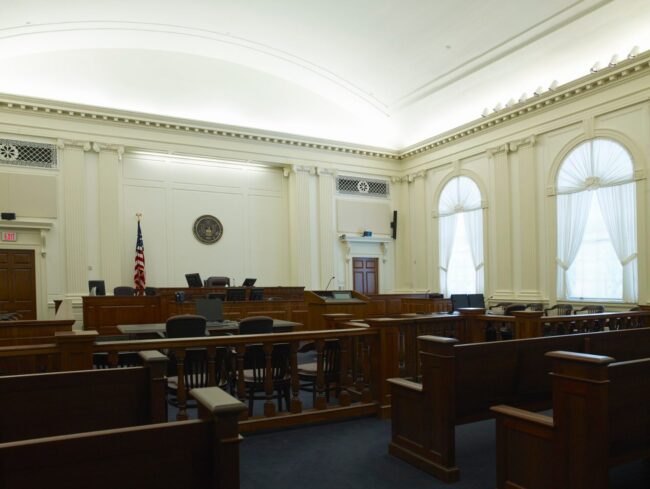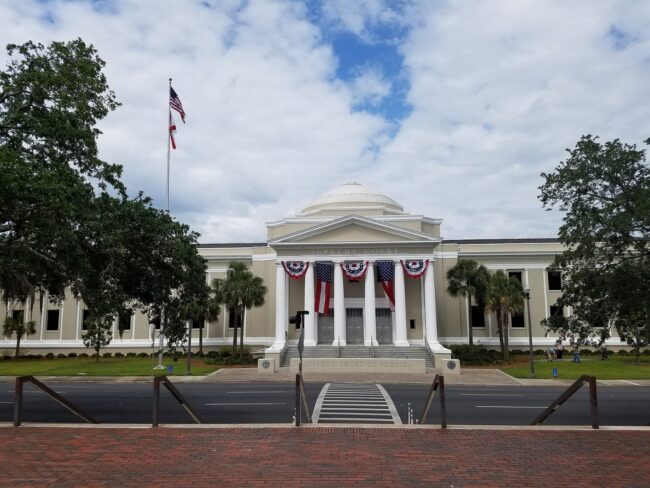
Photo: Waters.Justin, via Wikimedia Commons (CC0 1.0 Public Domain Dedication)
Quick Answer: Since January 1, 2025, Florida civil cases have run on court-imposed schedules: every case gets a track and a case management order whose deadlines “must be strictly enforced,” initial disclosures are due within 60 days of service, discovery must be proportional, and continuances are disfavored. The Florida Supreme Court has kept adjusting the rules through 2026, and appellate courts are enforcing the deadlines, pushing litigation work and spending toward the front of each case.
For decades, a Florida civil lawsuit moved largely at the pace the lawyers set. That ended at 12:01 a.m. on January 1, 2025, when the Florida Supreme Court’s rewrite of the Florida Rules of Civil Procedure took effect. Nearly two years in, the reforms have produced a string of follow-up rule opinions, an appellate split over how hard deadlines should bite, and a new reality inside litigation practices: the expensive work has to happen early. Here is what changed and what the record shows as of November 16, 2026.
What did the Florida Supreme Court change in the civil rules?
The overhaul came in two opinions in In re Amendments to Florida Rules of Civil Procedure, No. SC2023-0962. On May 23, 2024, the Court rewrote Rules 1.200, 1.201, 1.280, 1.440 and 1.460 to codify active case management, building on a Judicial Management Council workgroup proposal. On December 5, 2024, after 20 comments, a response from The Florida Bar’s Civil Procedure Rules Committee and oral argument, the Court kept nearly all of those changes and amended Rules 1.090, 1.310, 1.340, 1.350, 1.370, 1.380 and 1.410. In a companion case, No. SC2024-0662, it revised Rule 1.510 on summary judgment and adopted Rule 1.202, which requires lawyers to confer before filing most motions.
Six justices joined the May opinion in full. Justice Jorge Labarga supported the case management framework but dissented from importing federal proportionality language into Florida discovery. In December he wrote, “I cannot agree to incorporating the federal proportionality language into our state court discovery rules,” noting that federal judges have law clerks and magistrate judges that Florida trial judges lack, and warning that proportionality fights would strain strict deadlines.
How do case management orders and tracks work now?
Under Rule 1.200, each case is assigned to a streamlined, general or complex track within 120 days of filing. The court must issue a case management order within 120 days after filing or 30 days after service on the last defendant, whichever comes first, and its deadlines “must be strictly enforced unless changed by court order.” Summary judgment filing deadlines must be included. A Florida Bar Journal article by defense attorney Lovecia Holmes-Oglesby counted nine deadlines that orders must set for streamlined and general cases.
Chief judges implement the system by administrative order. Broward County’s Seventeenth Circuit issued Administrative Order 2025-24-Civ, signed by Chief Judge Carol-Lisa Phillips on July 24, 2025. It lists time standards of 12 months for streamlined cases, 18 months for general cases and 30 months for complex cases, and directs judges to apply “a firm continuance policy.”
What are initial disclosures and proportional discovery?
Amended Rule 1.280 requires each party, within 60 days after service of the complaint, to disclose witnesses, documents it may use, a damages computation and available insurance policies. A party may not seek discovery from any source until it has served its own disclosures, absent a stipulation or court order, and must keep supplementing. The rule adopts nearly all of the proportionality text of Federal Rule of Civil Procedure 26(b)(1), to be construed under the federal standard. Objections must state grounds “with specificity” and say whether material is being withheld, and Rule 1.380 now supplies sanctions for missed disclosures.
What changed for continuances, trial setting and summary judgment?
Rule 1.460 makes continuances disfavored, available only for good cause supported by specific facts, with sanctions for dilatory conduct. Rule 1.440 dropped the old “at issue” requirement; the court fixes the trial period 45 days before the projected period. A summary judgment response is due 40 days after service of the motion, and the hearing must be set at least 10 days after that deadline unless the parties stipulate or the court orders otherwise. Rule 1.202 conferral certificates are not required when a party is unrepresented, and the Bar Journal article counts 14 exempt motion types.
| Requirement | Rule | Key timing |
|---|---|---|
| Track assignment | 1.200 | Within 120 days of filing |
| Case management order | 1.200 | 120 days after filing or 30 days after service on last defendant, whichever is first |
| Initial disclosures | 1.280 | 60 days after service; no discovery before serving them |
| Summary judgment response | 1.510 | 40 days after service; hearing at least 10 days later |
| Trial-setting order | 1.440 | 45 days before projected trial period |
| Complex cases | 1.201 | Initial conference within 60 days; trial 6 to 24 months later |
| Continuances | 1.460 | Disfavored; good cause with specific facts |
Source: Florida Supreme Court opinions in SC2023-0962 and SC2024-0662; The Florida Bar News; The Florida Bar Journal.
How did the rules apply to pending cases?
The amendments reached all cases pending on January 1, 2025, except that initial disclosures do not apply to actions filed before that date. Existing case management orders stayed in force, but extensions became subject to the new rules, and older cases without an order had to receive one by April 4, 2025. Firms therefore had to re-calendar their existing civil inventory in early 2025, not just new filings.
Which follow-up amendments has the Court adopted through 2026?
The Court has kept adjusting the civil rules, mostly technically, while leaving the core framework intact. The most consequential 2026 change addresses a friction strict scheduling created: cases not reached during their trial period.
In No. SC2025-1894, reported by The Florida Bar News on October 19, 2026, the Court amended Rule 1.200(h) so that a rolled-over trial must be reset “as soon as practicable, given the needs of the case, the resources of the court, and the availability of the parties.” Former rules committee chair Cosme Caballero wrote that cases were being set when parties, counsel, witnesses or experts were unavailable. Coral Springs trial lawyer Dan Cytryn commented that he spent five hours on a motion and faced a $1,000 cancellation fee after repeated resets. The change takes effect January 1, 2027.
| Case No. | Decided | What changed | Effective |
|---|---|---|---|
| SC2024-0774 | Feb. 6, 2025 | Party representative with settlement authority may sign mediation agreements (Rule 1.730) | Apr. 1, 2025 |
| SC2024-0779 | Jan. 15, 2026 | Document and admission requests and responses served on all parties (Rules 1.350, 1.370) | Apr. 1, 2026 |
| SC2025-0582 | Jan. 15, 2026 | Jury demands must be filed with the court (Rule 1.430) | Apr. 1, 2026 |
| SC2025-1495 | Sept. 3, 2026 | Good cause still required for extensions, even when parties agree (Rule 1.090) | Oct. 1, 2026 |
| SC2025-1894 | Reported Oct. 19, 2026 | Party availability a factor in resetting trial (Rule 1.200(h)) | Jan. 1, 2027 |
Source: Florida Supreme Court opinions; The Florida Bar News.
Two related proposals were published for comment in 2026: SC2025-1795, which would restructure Rule 1.530 on new-trial and rehearing motions, and SC2026-0716, which would add an order “specially setting the case for trial” as a factor in resolving calendar conflicts under Rule 2.550. Final action on either had not been located as of this writing.
How are appellate courts enforcing the new deadlines?
The sharpest signal comes from the Sixth District Court of Appeal. In Crecelius v. Rizzitano, decided en banc on February 27, 2026, the court held that a trial judge may strictly enforce a case management order and exclude a late-disclosed expert without first finding prejudice, citing amended Rule 1.200. It certified conflict with 16 decisions from other districts that required a prejudice finding under Binger v. King Pest Control.
On March 20, 2026, the court applied that reasoning in Wal-Mart Stores East, L.P. v. Wynn, affirming exclusion of a defense expert’s new opinion offered after the deadline. The jury award was $1,000,000, reduced to $900,825.81 after setoffs, and the court noted the defendant never moved to extend the deadline. Judge Smith, concurring in result only, warned that changing the standard for pending cases “creates unnecessary confusion in the law.” With conflict certified, the issue may reach the Florida Supreme Court; until then, the outcome can depend on the district.
There are limits. In Burgess v. Campbell, decided January 8, 2025, under the earlier rules, the Fourth District reversed a default entered after defense counsel missed two case management conferences, one because the date was never calendared and one because of a Zoom failure, holding that such sanctions require findings of willful conduct. The case shows how a back-office calendaring miss can put an entire case at risk.
What does the evidence show about firms, staffing and budgets?
Hard numbers remain scarce. This review found no statewide study from the Florida courts or The Florida Bar, as of mid-November 2026, measuring the rules’ effect on litigation cost, staffing or time to resolution. The National Center for State Courts reported on August 4, 2026, that preliminary 2025 data from about 20 reporting jurisdictions, including Florida, showed civil clearance rates declining after several years of improvement, without isolating any state’s rule changes.
The record does show where the work has moved. The Bar Journal article advised defense counsel to begin investigating “immediately upon notice of a lawsuit.” At a Florida Bar webinar reported December 3, 2025, Florida Registered Paralegal Brean Salvo said cases are moving faster because judges scrutinize them closely, trial deadlines are strictly enforced and continuances are rarely granted. She recommended a hearing “cheat sheet” tracking deadlines and discovery status, and said her plaintiff-side practice serves initial disclosures with the complaint.
What does that mean for law firm operations?
- Front-loaded spending. Witnesses, documents, damages computations and insurance information must be ready within about two months of service.
- Calendaring as risk management. With nine or more court-set deadlines per case, docketing errors can mean excluded evidence.
- Earlier expert engagement. Crecelius and Wynn make late expert work costly in the Sixth District.
- Trial-ready staffing. Disfavored continuances require firms to staff for dates they cannot easily move.
- Client budgeting. Insurers and corporate clients must plan for earlier spending and firmer timelines.
Florida’s separate tort-reform changes are outside the scope of this article; the procedural rules apply to all civil cases regardless of subject.
Brian’s Take
Read as an analyst would read any rule change, the question is where the costs land, and the answer here is clear: Florida did not make litigation cheaper by decree; it moved the bill forward. When disclosures are due in 60 days and discovery cannot start until they are served, money once spent in year two gets spent in month two. For a business defendant, that changes cash planning, and for law firms it changes how they price and staff cases.
The Sixth District rulings are the part I would not ignore. A late expert opinion stayed out of Wynn, a case that ended in a $1,000,000 verdict before setoffs. That is strict enforcement measured in dollars. Until the Supreme Court weighs in, every case management deadline in that district carries that kind of downside.
I also note what is missing: no published statewide measure yet of whether the reforms cut total cost or time. The Court is still adjusting. I would want real outcome data before concluding the overhaul is paying off.
Frequently Asked Questions
When did Florida’s new civil procedure rules take effect?
January 1, 2025, under opinions in SC2023-0962 and SC2024-0662 issued in May and December 2024.
Do initial disclosures apply to older cases?
No. They do not apply to actions filed before January 1, 2025, though the other amendments apply to pending cases.
Can parties simply agree to extend deadlines?
Not freely. Case management deadlines change only by court order, and in September 2026 the Court declined to allow agreed Rule 1.090 extensions without good cause.
What changes take effect in 2027?
Starting January 1, 2027, courts resetting a trial that was not reached must consider the availability of the parties.
Is a late expert automatically excluded now?
It depends on the district. The Sixth District requires no prejudice finding, but it certified conflict with 16 decisions from other districts.
This article is news and analysis, not legal advice.
Sources and Further Reading
- In re Amendments to Florida Rules of Civil Procedure, No. SC2023-0962 (May 23, 2024) — Supreme Court of Florida
- In re Amendments to Florida Rules of Civil Procedure, No. SC2023-0962 (Dec. 5, 2024) — Supreme Court of Florida
- Florida Supreme Court revises civil case management reforms before January 1 implementation — The Florida Bar News
- A Race to Work the Case: New Changes to the Florida Rules of Civil Procedure and What It Means for Defense Civil Litigators — The Florida Bar Journal
- Paralegals urged to “aggressively” manage cases under new civil rules — The Florida Bar News
- Supreme Court adds parties’ availability to trial-setting considerations — The Florida Bar News
- In re Amendments to Florida Rules of Civil Procedure, No. SC2024-0774 — Supreme Court of Florida
- In re Amendments to Florida Rules of Civil Procedure 1.350 and 1.370, No. SC2024-0779 — Supreme Court of Florida
- In re Amendments to Florida Rules of Civil Procedure 1.070, 1.430, and Form 1.902, No. SC2025-0582 — Supreme Court of Florida
- In re Amendments to Florida Rules of Civil Procedure 1.080, 1.090, and 1.490, No. SC2025-1495 — Supreme Court of Florida
- Publication notices, Nos. SC2025-1795 and SC2026-0716 — The Florida Bar
- Administrative Order 2025-24-Civ — Seventeenth Judicial Circuit of Florida
- Crecelius v. Rizzitano, No. 6D2024-2217 — Florida Sixth District Court of Appeal
- Wal-Mart Stores East, L.P. v. Wynn, No. 6D2023-1940 — Florida Sixth District Court of Appeal
- Burgess v. Campbell, No. 4D2023-2281 — Florida Fourth District Court of Appeal
- Early data signals increased civil filings, decreased clearance rates in 2025 — National Center for State Courts
About the Author